Between Diversity and Cohesion

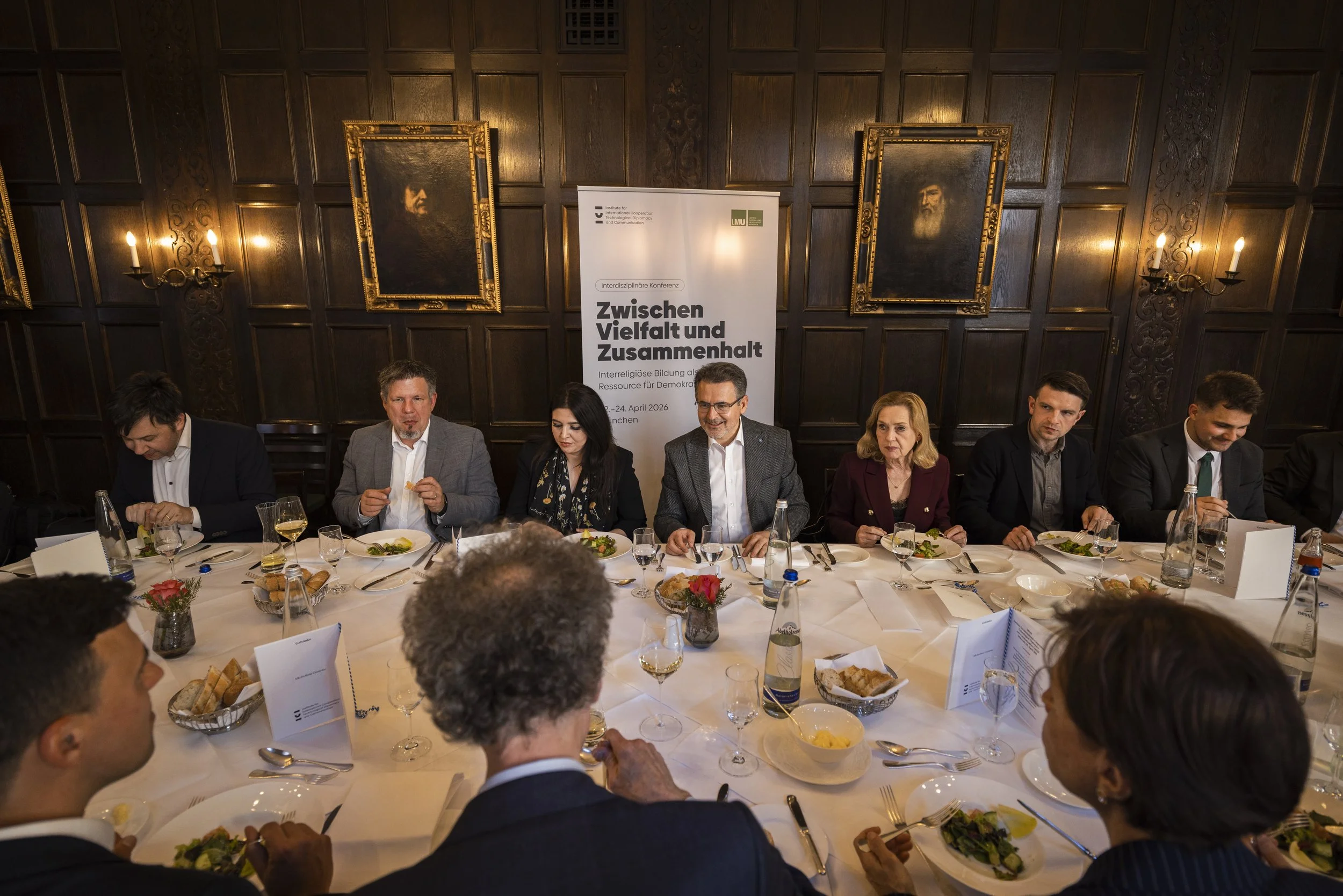










Interfaith Education as a Resource for Democratic Education
In an increasingly diverse society, understanding different religious and ideological perspectives is essential for a functioning democratic society. Interfaith education gives people the opportunity to reach out to one another beyond prejudices and stereotypes, discover common ground, and address conflicts constructively.
Our approach views interfaith education not merely as a means of imparting knowledge about different faiths, but as an active learning environment for developing democratic skills. These include the ability to engage in dialogue, to show empathy, to critically reflect on one’s own values, and to recognize the rights of others. Through workshops, seminars, and educational programs, participants are empowered to experience diversity as a strength and to actively contribute to social cohesion.
Promoting interfaith literacy is therefore not only a step toward greater tolerance, but also a concrete resource for fostering democracy. By learning to act responsibly within diverse communities, people make an important contribution to a vibrant, inclusive, and resilient society.
Conference Objectives
Clarifying the role of religious education in democratic societies: Examining how religious education can promote tolerance, critical thinking, and democratic resilience in various social contexts—from schools and communities to the media, political education, and civil society.
Strengthening interdisciplinary and interfaith collaboration: Building a network among religious education, political science, sociology, theology, civil society initiatives, and school stakeholders to develop shared perspectives on democratic education.
Advancing professionalization in practice: Developing practical approaches to help teachers and practitioners use religious education specifically to foster democratic education and design programs that promote pluralism and conflict resolution.
Formulate recommendations for action: Develop realistic recommendations for policymakers, government agencies, the education sector, and civil society to structurally embed religious education as a resource for democracy education.
Topics
Religious Education in Civic Education: Opportunities for Democratic Learning
Interfaith Dialogue as a Social Practice: Forms, Experiences, Perspectives
School as a Place Where Democracy Is Put into Practice: Practices, Conflicts, and Solutions
Religious Education in Europe: Models, Experiences, and Comparative Perspectives in Pluralistic Societies
Between Religion, Politics, and Society: Narratives, Emotions, and Polarization in Civic Education
Digital Spaces, Religion, and Democracy: Opportunities and Challenges for Education and the Public Sphere